I’ve devised plenty of bread formulas in my time, but never one that developed in the course of the actual mixing/fermenting/baking process.
First off, Santes Dwynwen is the patron saint of lovers in Wales and her day is 25 January. My version of her story can be found here. Back in 2018 I produced a loaf in her honour, Torth Santes Dwynwen.
This year I only realised her celebration was coming up a couple of days ahead of time, but I still felt she deserved a new bread. So, first mistake; shouldn’t have started till I was ready. Not only that, my rye starter (and I fancied rye) hadn’t been touched since Christmas.
I thought I would model the new bread on Paul Merry’s Normandy Cider Rye, which has two starter builds with equal weights of wheat and rye flour. The final dough has only 17% rye so it’s largely a white wheat flour loaf.
The idea was to continue from the original loaf by including apricots (which I concluded Dwynwen could have grown in her walled garden) and with the use of mead instead of cider.
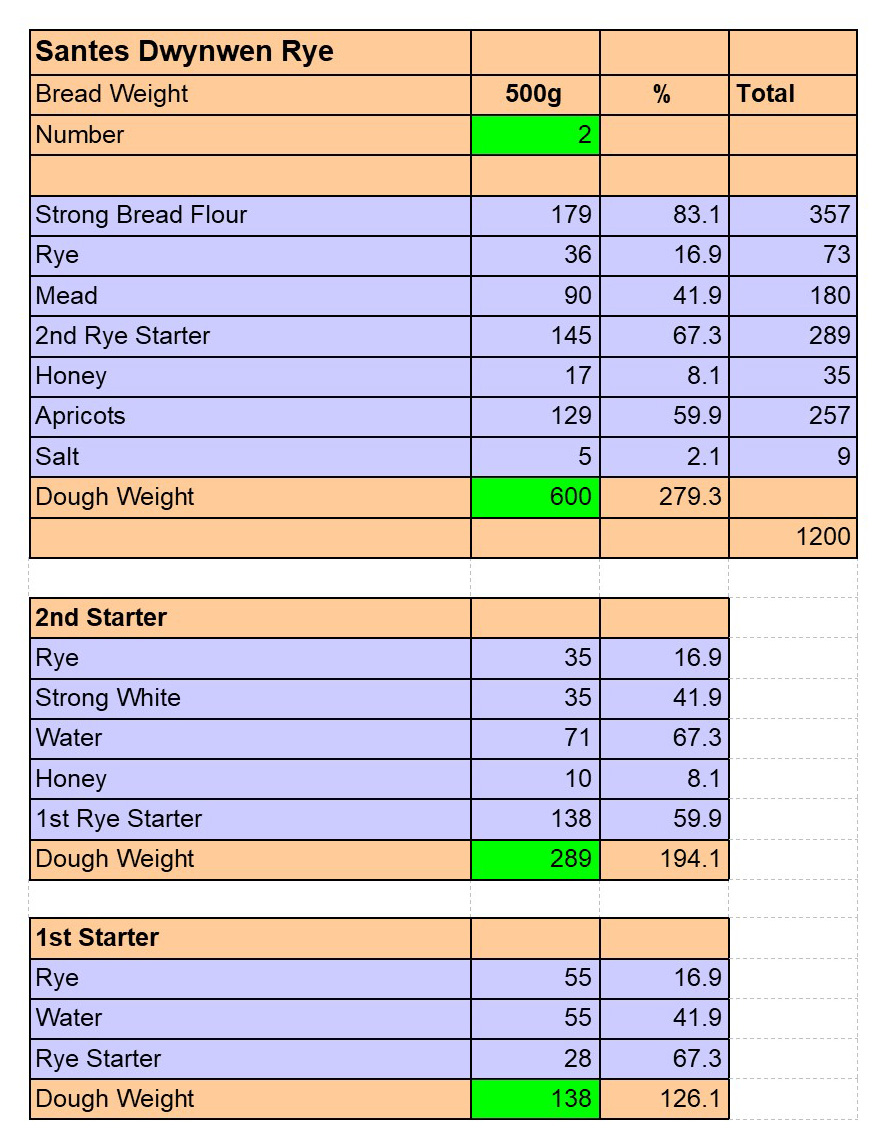
So the first starter I cheated on because my rye starter had been sitting at room temperature for at least four weeks and, although it wasn’t mouldy, it was a bit sad (so I boosted it with wheat starter).
Next mistake, I could only have the bread ready on the day if I bulk fermented overnight in the fridge. I just had the feeling that this wasn’t the dough for that sort of treatment. (Fridge too cold, rye flour, amount of alcohol in dough.)
Still, mixed the dough, gave it a few hours at room temperature with a couple of folds, put it in the fridge, went to bed. Woke up in the middle of the night – Eureka moment!
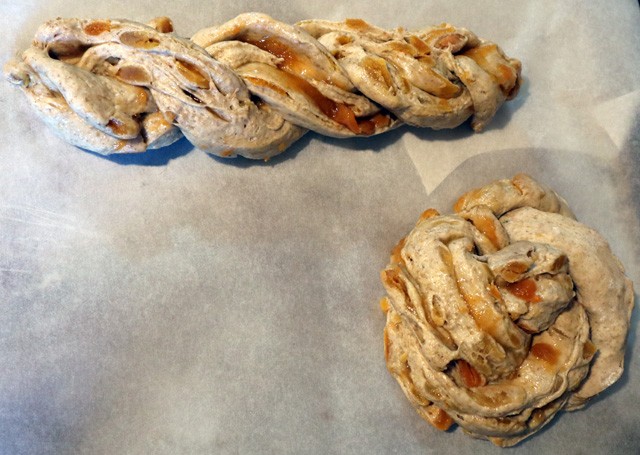
I had been planning to make two loaves and bake them in panibois boxes, but why not turn them into babka? (Never trust bright ideas that materialise at 4.30 a.m.)
Next morning, after giving the dough a couple of hours to warm up, I divided it in two and proceeded to roll it out. Rolling out dough that has been studded with coarsely chopped apricots is not very satisfactory …
I had been encouraged in this endeavour by the discovery of a jar of apricot jam in the store cupboard. Spread a thin layer of same on the dought rolled it up as a cylinder, cut it along its length and shaped as babka. Repeated with second half of dough – different babka shape.

Proved them for a couple of hours, egg-washed them, baked them in the Pico at 250C top, 220C bottom, no steam but vents closed. After 15 minutes, 2nd egg-wash, opened the vents, reduced the temperature 220C top, 180C bottom. About 40 minutes in total.
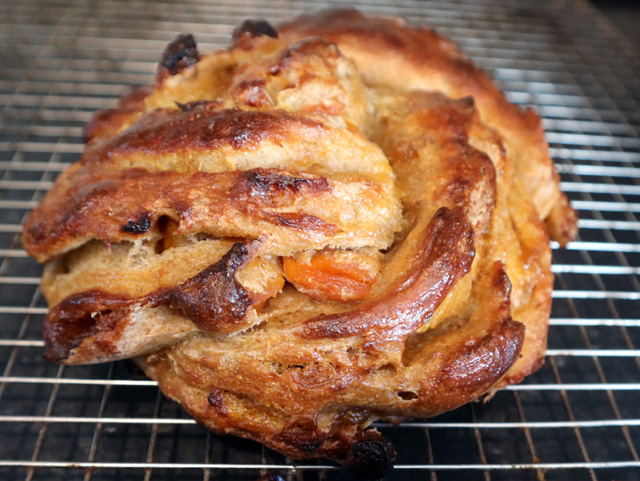

Got to admit I was pretty happy with the appearance of the breads, and the taste was great. But you need a good pair of jaws and confidence in your teeth to really enjoy it.
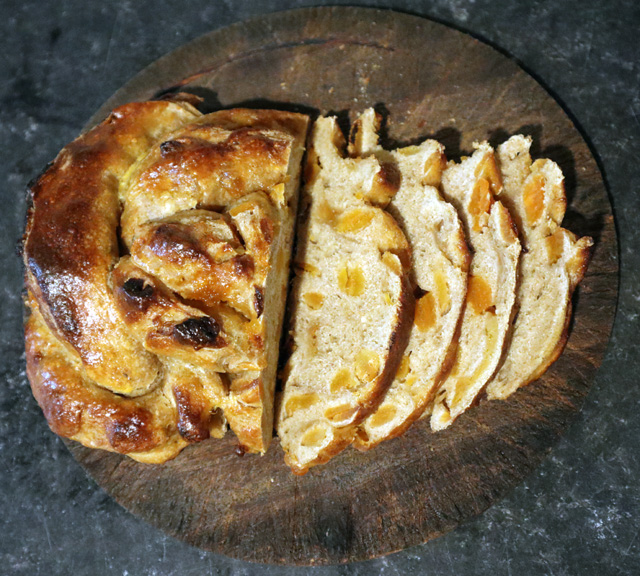
Where do we go from here? This was by no means a write off – I don’t think there would have been a problem if I’d done my planning.
Next time I would chop the apricots smaller and soak them in mead and leave them out of the dough until the final shaping.
I’d leave the dough basically the same minus the apricots and maybe substituting a little water in the mead.
I’d definitely use the direct method – mix, bulk ferment, shape, prove, bake, in one day.

Right now I’d better attend to my rye starter …

 The PArtisan Baker